
Due to the popularity of Power over Ethernet (PoE), copper cables are typically top of mind when it comes to power delivery over a cable. With the introduction of hybrid cables, however, it’s now possible to deliver DC power and data through a fiber cable. This lets you deliver power remotely with electrical conductors (like a copper Ethernet cable can) while also enjoying the performance of fiber to carry data.
In order for IoT devices to work as expected in applications utilizing hybrid cable, however, it’s vital that you know exactly how much power your hybrid cable will be able to supply – and how far that power can travel before performance issues arise.
There’s no one-size-fits-all answer that will work for every installation, so calculating power reach should be done for each installation that uses hybrid cable.
When making this calculation, there are several factors to consider:
- The amount of power you need to deliver to your device (whether it’s a camera, wireless access point, distributed antenna system or something else)
- The size of your wire (to take power over longer distances, larger gauge sizes are necessary)
- Voltage drop percentage (the amount of voltage loss that occurs through a circuit due to current-flow resistance)
- Necessary power delivery in wattage
To help with this calculation, we put together a handy (and free) online tool: the DC System Max Reach Calculator. If you’ve got a project coming up that calls for hybrid cable, the calculator allows you to try out different variables to see the impacts each one has on power delivery and reach.
Once you select your preferred parameters, the calculator automatically tells you how many meters (and feet) you can expect to carry power, the DC voltage that will be delivered and the amount of current per conductor.
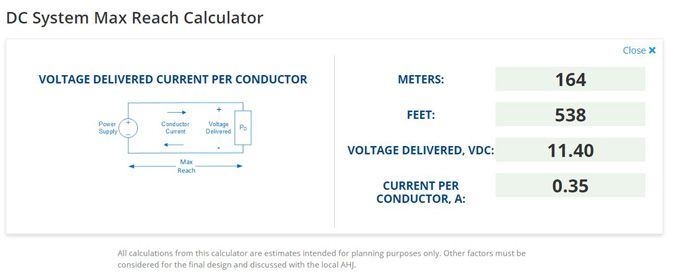
To effectively assess power reach for your hybrid cable installation, you’ll need the following information ready to input into the calculator:
- How much power does your end device need to have?
- Which wire gauge are you going to use?
- What voltage drop are you allowing?
- What power level needs to be supplied?
If you aren’t sure about the answers to some of these questions – that’s okay! Our experts are here to help you make the right decision. We can even suggest cables with multiple conductors for cases where extra reach or power is needed for your solution. The calculator tool helps to understand how changing parameters in a single pair can help you make those decisions based on the factors you do know.
Try the calculator out here!
作者简介
Ron Tellas
Belden企业解决方案业务部高级解决方案架构师
Ron Tellas 是射频设计和电磁传播方面的主题专家,于 2016 年加入 Belden,帮助制定智能建筑技术和应用的路线图。 他现在利用这些经验将系统、设备和连接纳入网络解决方案。 Ron 代表 Belden 参加多个标准组织、国家电气规范委员会并担任 FMP 联盟的董事会成员。 他拥有电气工程硕士和学士学位、工商管理硕士学位,也是 17 项美国专利的发明人。 罗恩因其对电信行业的杰出和有影响力的贡献而自豪地荣获 2024 年 Harry J. Pfister 奖。