This alone proves bandwidth capacity requirements are increasing—and we haven’t even touched on IoT devices connecting to enterprise networks. VoIP phones, IP surveillance cameras, lighting systems and building controls are all connecting to networks to transfer and receive data and maximize performance in real time.
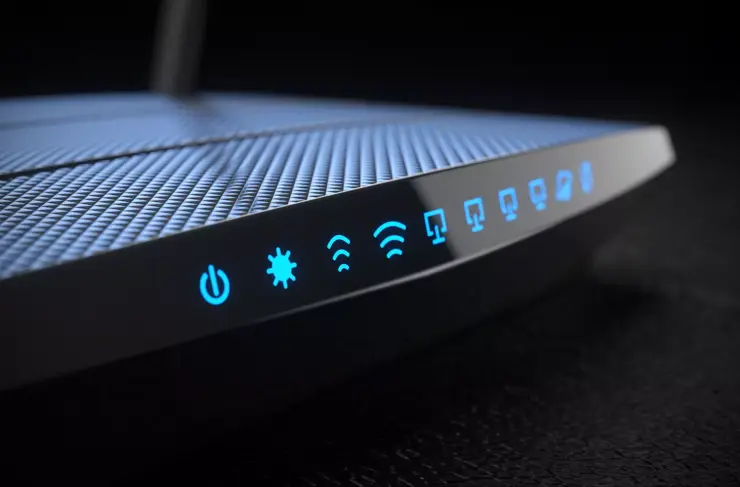
More wireless network users and devices also call for more wireless access points (WAPs), also connecting to your enterprise network. Without an adequate number of WAPs, data rates and throughput will decrease as users move farther away from WAPs (and more users connect).
What will increasing numbers of WAPs in your enterprise mean for your network?
PoE Will Remain A Necessity
Power over Ethernet (PoE)—carrying power and data to a device through one cable—is growing in adoption and WAPs are a key reason why. BSRIA predicts that more than 80% of WAPs will rely on PoE by 2020 and the global PoE solutions market is expected to grow at a compound annual growth rate (CAGR) of 12.56% between 2016 and 2022, reaching $1 billion by 2022.
PoE is a cost-effective way to speed up installation and reduce the amount of cable needed to power and control networked devices and eliminate multiple cable runs. PoE cable efficiently connects WAPs directly to the network while providing adequate power wattag.
Simpler Connections with Direct Connect
PoE utilizes twisted-pair copper cable and (ideally) Category 6A cable, to span from equipment to end devices. From there, the cable is 'connector-ized' via modular RJ45 connectivity. Enterprise network infrastructure is becoming a more popular deployment strategy where plugs can be placed on the end of horizontal cabling to connect directly to a static end device. When PoE cable directly connects to a WAP without connection points in between, you achieve more efficient power delivery and minimal insertion loss. We like to call this method “direct connect.”
Higher-Performance Cabling
When thinking about wireless capability, it’s easy to think solely about wireless aspects of your enterprise. But rarely is a wireless network actually wireless—it relies on a robust, high-performance cabling system behind the scenes. For IoT and BYOD (bring your own device) to be operate efficiently, connectivity must be maintained among ever-increasing numbers of devices. Careful consideration should be given to the cabling system that supports user and device connectivity.
Can your wired network (cabling) support increased wireless bandwidth?
As WAP specifications continue to evolve*, power consumption from these devices increases as data rates and number of Ethernet uplinks increase. As more power must be transmitted through the PoE cable, the amount of heating in the cable rises, potentially causing performance issues under certain conditions due to increased insertion loss.
*802.11ac Wave 2 is the most current wireless standard however, new wireless specifications are on the horizon.
Category 6A cabling can handle full multi-gigabit implementation and higher cable uplink speeds. It's designed to transmit higher power wattage* supporting data rates up to (and including) 10GBASE-T for current and future applications.
*Best -in-class Category 6A cables have enough insertion loss margin to handle the extra heat generated from tightly packed cables and still maintain 100m channel lengths.
When adding more WAPs to expand reach and bandwidth capacity, cabling systems must support power and data, maintain information capacity/low insertion loss and withstand increased heat levels from bundling. Learn more about Belden’s Category 6A cabling and how our cabling experts we ensure your enterprise LAN is ready to handle more WAPs.
作者简介
Ron Tellas
Belden企业解决方案业务部高级解决方案架构师
Ron Tellas 是射频设计和电磁传播方面的主题专家,于 2016 年加入 Belden,帮助制定智能建筑技术和应用的路线图。 他现在利用这些经验将系统、设备和连接纳入网络解决方案。 Ron 代表 Belden 参加多个标准组织、国家电气规范委员会并担任 FMP 联盟的董事会成员。 他拥有电气工程硕士和学士学位、工商管理硕士学位,也是 17 项美国专利的发明人。 罗恩因其对电信行业的杰出和有影响力的贡献而自豪地荣获 2024 年 Harry J. Pfister 奖。