These short lengths of cable with attached RJ45 plugs, patch cords complete the signal-routing channel by connecting computers to the wall, and cross-connects to hubs. As the number of network-connected devices continues to increase, the numbers of patch cords being used is also increasing. This small component can make a big difference (and potentially cause big problems) in network performance.
Low-quality, cheap patch cords are often the cause for reliability issues in high-speed channels. When something changes in the channel, the link must be re-established. A cheap patch cord may dramatically change the channel, causing performance problems. If this type of cord is bumped or moved, a change in the channel occurs. The link will drop, and the DSP must re-establish the link. One bad patch cord can cause performance delays for end-users, leading to frustration and network problems. Cheap patch cords can be the weakest link in a high-speed channel.
Cheap Patch Cords = Poor NEXT (Near-End Crosstalk)
NEXT is a computation of the unwanted signal coupling from a twisted pair at the near-end into a different twisted pair at the near end, expressed in decibels (dB).A larger number means less crosstalk; a smaller number means more crosstalk.
In poor NEXT conditions (with lots of crosstalk), the channel must rely more heavily on the digital signal processing of the PHY.
Cheap Patch Cords = Poor RL (Return Loss)
A ratio expressed in dB of the power of the outgoing signal to the power of the reflected signal. These reflections are typically caused by an impedance mismatch. High return loss is usually desired, indicating fewer reflections and well-matched components; it leads to lower insertion loss.
In situations with poor (low) return loss, the channel must rely more heavily on the echo cancellation of the PHY.
Cabling Requirements for Patch Cords
Patch cords must pass all cabling requirements; manufacturers are responsible for verifying this.
If low-quality cabling is used to create a cheap patch cord, and that patch cord is tested only as a patch cord, only near-end crosstalk and return loss will be measured. Testing doesn’t confirm whether other cable parameters will be met.
This is especially important to note for Category 6A patch cords. When high-quality Category 6 cable is tested, it may pass Category 6A patch cord requirements because only near-end crosstalk and return loss are measured.
When these patch cords are bundled and placed in a Category 6A channel, however, the channel fails alien crosstalk requirements. Why? Because Category 6 cable isn’t designed to handle high data-speed requirements.
In a 2010 electrical performance test of Category 6 copper patch cords conducted by the Communications Cable and Connectivity Association (CCCA), 85% of cheap patch cords failed NEXT and/or RL. (These patch cords were manufactured by companies largely unknown in North America.) In a second test of Category 6 copper patch cords produced by well-recognized manufacturers, a 0% failure rate was demonstrated. Although the study is a few years old, the results still apply today.
The Difference a High-Quality Patch Cord Can Make
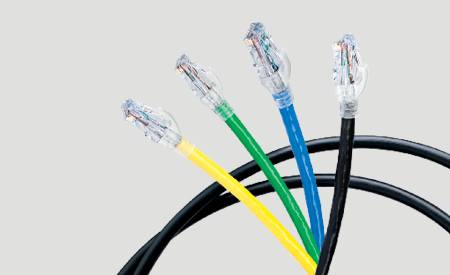
At Belden, we also offer traceable patch cords, which allow you to quickly and easily identify and trace network connections. For all of our patch cords, we also test every assembly to ensure proper channel performance. All Belden patch cords offer maximum return-loss performance under all patching conditions.
Learn more about Belden’s solutions for high-performance networks here.
作者简介
Ron Tellas
Belden企业解决方案业务部高级解决方案架构师
Ron Tellas 是射频设计和电磁传播方面的主题专家,于 2016 年加入 Belden,帮助制定智能建筑技术和应用的路线图。 他现在利用这些经验将系统、设备和连接纳入网络解决方案。 Ron 代表 Belden 参加多个标准组织、国家电气规范委员会并担任 FMP 联盟的董事会成员。 他拥有电气工程硕士和学士学位、工商管理硕士学位,也是 17 项美国专利的发明人。 罗恩因其对电信行业的杰出和有影响力的贡献而自豪地荣获 2024 年 Harry J. Pfister 奖。