
How Can Ethernet Networks Increase Performance?
- Faster speeds
- Higher bandwidth
- Universal compatibility
However, it’s important to realize that your industrial network (r)evolution is not a “one-to-one” change. That is, Ethernet doesn’t “just” do what fieldbuses do; in fact, its use opens up a whole new world of possibilities in addition to simply carrying your network traffic day to day—possibilities that fieldbus users could never even dream of implementing.
The extent to which industrial Ethernet operators are taking advantage of these possibilities are all over the map. Some are driving Ethernet hard in their machine, robot and other automation applications and are accruing significant gains in productivity; others are not even aware of many of the time and money-saving opportunities that are now well within their reach.
Further, for the builders of robots and machines, the advent of the Ethernet age gives them special advantages. The industrial world is slowly working towards Ethernet. It has a ways to go still, which means that these machine builders will also see the following advantages in utilizing Ethernet networks:
- Differentiating their offering
- Demonstrating value-added capabilities
- Gaining competitive advantage
By being knowledgeable about the advancing capabilities that Ethernet makes possible, informing customers of the possibilities and making it easy to build these capabilities into their equipment on demand, there is a huge opportunity to gain ground as a preferred supplier as other builders and users play catch up.
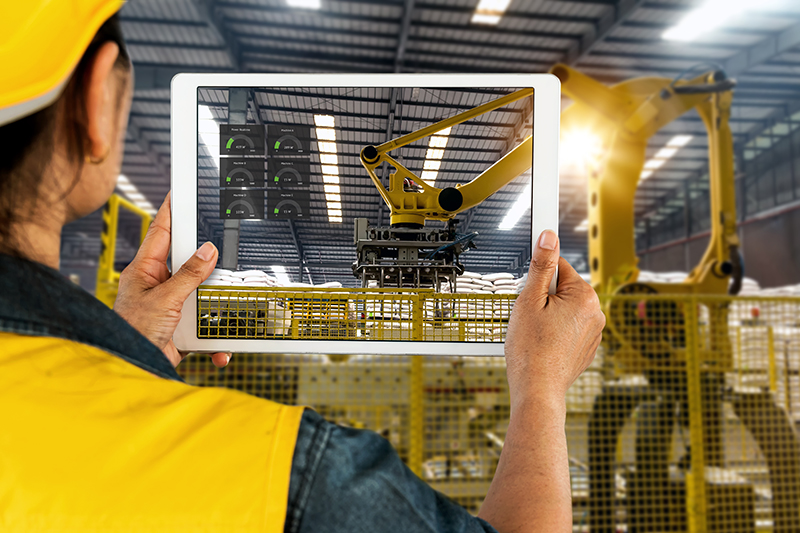
How to Stay Ahead of Ethernet Trends
Perhaps one of the most useful capabilities enabled by Ethernet networks is to use its highly superior speed and bandwidth to capture huge volumes of real-time production data in ways never before possible. Powerful analytics programs—often highly specialized to industry and application—are becoming available that help make sense of these reams of raw information to uncover trends, lead to process tweaks, increase yields, improve quality and reduce scrap and waste. Others are using data streams to maintain and archive production data to trace batch parameters, raw material sources and more.
Similarly, the inherent properties of Ethernet are making it possible to distribute communication away from central processors in ways that fieldbuses could never accomplish. More direct machine-to-machine communication is empowering process designers to re-imagine new workflow possibilities on the plant floor, enabling faster “hand-offs” and more robust operations between individual machines.
In these cases and many others, machine builders can help their customers think through the possibilities, working with them upfront for mutual benefit. Once understanding the needs of the specific application, OEMs can build in appropriate infrastructure—such as sensors, switches and Ethernet devices—that will expand the capabilities of their machines and make them ready to deliver enhanced operation at the customer location from day one. Savvy machine users should get their builder partners involved early, and OEMs should be ready and willing to participate in and lead such discussions for optimum win-win partnerships.
With Opportunity Comes Challenges
Of course, entering the Ethernet world, while enabling enormous benefits, also brings with it a number of potential challenges
Fortunately, Belden has your back, with a new white paper that identifies these challenges and provides information on how to meet them head on. And, just as importantly, provides more details on the valuable trends and capabilities that Ethernet is enabling in industrial networks—not only enhanced data capture and increased machine-to-machine communication, but additional trends such as:
- Lowering operating costs through closer user/builder partnerships
- Gaining even faster speed through time sensitive networking
- Generating new ideas on using Ethernet to stay ahead of the competition
作者简介
亚伦·哈默
工业解决方案顾问
Aaron Hammer 是 Belden 客户创新中心的工业解决方案顾问。 在百通任职的 8 年间,他担任过多个职务,包括汽车工业网络解决方案经理、工业销售工程师和现场应用工程师。 Aaron 拥有超过 25 年的工业自动化工程经验,负责为单个车间内拥有数万台以太网设备的汽车设施设计安全的工业以太网基础设施,并负责解决从生产车间到 IT 部门出现的最复杂问题。 他拥有托莱多大学电子工程技术学士学位,并获得以太网专家、网络专业人员、路由专业人员、无线专业人员和 Profinet 工程师认证。