
While wireless can support many of these connections, it can also be limiting because the devices also require power. 4-pair Ethernet offers the right technical performance, but can be too large and bulky for building-automation applications. With hundreds or thousands of devices and sensors in just one facility, smaller is definitely better when managing and routing cables. This makes single-pair Ethernet ideal for small IoT devices and sensors.
As single-pair Ethernet becomes more familiar, it also raises lots of questions: How will single-pair networks function? What’s the best way to support them? Which applications will they best support?
Bringing Single-Pair Ethernet to the Forefront
To discuss advances in technology, the Single-Pair Ethernet Consortium (SPEC) was formed, bringing together organizations that make single-pair Ethernet devices, equipment and connectivity. The group’s hope is to nurture the adoption and growth of single-pair networks in a standards-compliant ecosystem that discourages proprietary network types and instead makes use of Ethernet.
Belden is proud to be one of the founding members of the Single-Pair Ethernet Consortium, working alongside the Telecommunications Industry Association (TIA) to accelerate the adoption of next-generation OT and IoT connectivity.
The Single-Pair Ethernet Consortium was recently “unveiled” during a 2019 BICSI Fall Conference panel discussion, which touched on every aspect of the ecosystem.
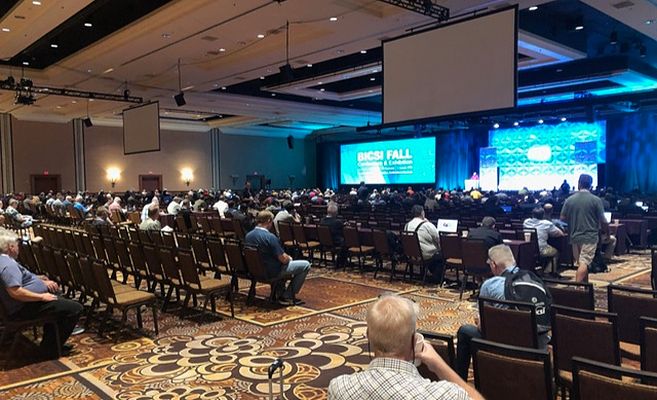
During BICSI, the Consortium also discussed how it will provide value to technology leaders and users across the building automation technology ecosystem as it:
- Takes steps to better understand the market need for single-pair networks
- Increases awareness and acceleration of single-pair Ethernet in building automation technology and networks
- Conducts research and consolidation of market analysis information
- Discusses the best way to build ecosystem support for single-pair Ethernet technologies
- Provides a collaborative forum where network and building automation technology leaders, including manufacturers, integrators, facilities managers and design/engineering professionals, can collaborate on using single-pair Ethernet
- Interprets the benefits of evolving standards and how they support interoperability and market growth
By rallying around a standards-based technology, the Single-Pair Ethernet Consortium believes that the IoT revolution will experience explosive growth and finally allow organizations to benefit from all IoT has to offer in terms of efficiency, automation and cost savings.
Getting Involved
Involvement in the Single-Pair Ethernet Consortium is open to any organization that’s interested in accelerating the acceptance of single-pair Ethernet technologies in building automation technology and networks. If this sounds like something you’d be interested in, post a comment below and I’ll tell you more about it.
作者简介
Ron Tellas
Belden企业解决方案业务部高级解决方案架构师
Ron Tellas 是射频设计和电磁传播方面的主题专家,于 2016 年加入 Belden,帮助制定智能建筑技术和应用的路线图。 他现在利用这些经验将系统、设备和连接纳入网络解决方案。 Ron 代表 Belden 参加多个标准组织、国家电气规范委员会并担任 FMP 联盟的董事会成员。 他拥有电气工程硕士和学士学位、工商管理硕士学位,也是 17 项美国专利的发明人。 罗恩因其对电信行业的杰出和有影响力的贡献而自豪地荣获 2024 年 Harry J. Pfister 奖。